Understanding the Learning Brain
A Symposium Honoring Henning Scheich
November 10, 2026 | Leibniz Institute for Neurobiology, Magdeburg
How does the brain learn? What allows it to adapt, remember and make sense of the world?
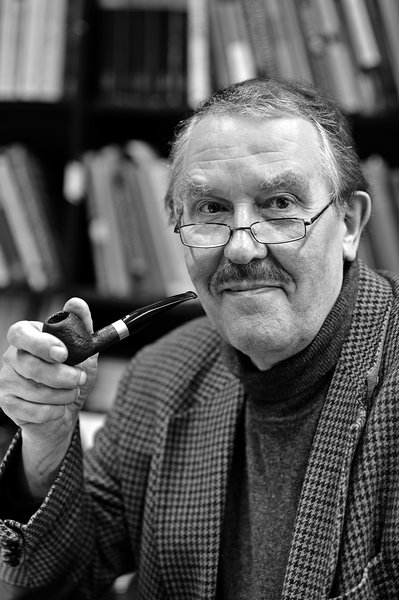
These questions shaped the scientific work of Prof. Dr. Henning Scheich (1942–2025), founding director of the Leibniz Institute for Neurobiology in Magdeburg. His research helped establish learning, memory and brain plasticity as central questions of neuroscience in Magdeburg and beyond. In his honor, the LIN hosts a scientific symposium dedicated to the learning brain, its mechanisms, its history and its future.
“Learning is a process of restructuring - slow, fragile, and accompanied by pauses and mistakes.” (Henning Scheich)
Henning Scheich’s understanding of learning points beyond the laboratory. It describes how brains adapt, how scientific ideas develop and how institutions grow. The symposium takes this thought as its starting point: bringing together long-standing colleagues, companions and members of the next generation of neuroscientists to honor his work by continuing the questions that shaped it.
The program includes scientific sessions, time for personal exchange and a panel discussion featuring former contemporaries and colleagues of Henning Scheich: “What former predictions tell us about the future of Neuroscience”. The discussion will be inspired by the so-called manifesto “Eleven Leading Neuroscientists on the Present and Future of Brain Research” published in Gehirn & Geist in 2004.
Registration is free of charge.
The official conference language is English.
↗ Thank you for the numerous registrations. The official registration is now closed. Please contact the organizers directly (symposium-scheich(at)lin-magdeburg.de) to be added to the waiting list. We will get back to you as soon as there are available places.
About the Symposium
Henning Scheich’s work connected fundamental questions of brain research with a broad vision for science, research infrastructure and scientific exchange. As founding director of the LIN, he helped shape a place where learning, memory and brain plasticity could be studied across disciplines.
This symposium honors that legacy by looking forward. What do we know today about the learning brain? Which questions remain open? And how can the next generation of neuroscientists build on the ideas, methods and debates that shaped the field?
Program (PDF)
Program
| 11:00 – 11:45 | Words of Welcome and Tribute to a Great Mind (part 1) | Stefan Remy | Leibniz Institute for Neurobiology Magdeburg | Welcome from the Scientific Director of the Leibniz Institute for Neurobiology Magdeburg |
| Iris Pigeot | Leibniz Institute for Prevention Research and Epidemiology Bremen | Welcome from the Spokesperson of the Life Sciences Section of the Leibniz Association | ||
| Thomas Münte | University Medical Center Schleswig Holstein, Lübeck | Welcome from the Vize President of the University Lübeck and former Academic Senator and Vice Dean of the Otto von Guericke University Magdeburg | ||
| 11:45 – 12:45 | "Understanding the Learning Brain" - Scientific talks (session 1) | Frank Ohl | Leibniz Institute for Neurobiology Magdeburg | Henning Scheich - a pioneer of neuroethology and cognitive neuroscience |
| Kishore Kuchibhotla | Johns Hopkins University Baltimore | Latent knowledge in the auditory cortex | ||
| 12:45 – 13:45 | Lunch Break | |||
| 13:45 – 15:15 | "Understanding the Learning Brain" - Scientific talks (session 2) | Onur Güntükin | Ruhr University Bochum | From functions to systems and back |
| Jennifer Bizley | University College London | Non-auditory influences on auditory scene analysis in auditory cortex | ||
| Stefan Treue | German Primate Center Göttingen | World-class neuroscience – the contribution of research on non-human primates | ||
| 15:15 – 15:45 | Coffee Break | |||
| 15:45 – 17:15 | "Understanding the Learning Brain" - Scientific talks (session 3) | Siegrid Löwel | Georg August University Göttingen | Panta rhei: the dynamic brain or how do I keep my brain young? |
| Rainer Goebel | Maastricht University | High-resolution fMRI for neuroscience: from basic research to clinical applications | ||
| Jean-Marc Edeline | Institute of Neurosciences Paris-Saclay | A cognitive view of the auditory cortex | ||
| 17:15 – 17:45 | Tea Time | |||
| 17:45 – 18:00 | Words of Welcome and Tribute to a Great Mind (part 2) | Walter Rosenthal | Friedrich Schiller University Jena | Welcome from the President of the German Rectors’ Conference and Spokesperson for the Alliance of German Science Organisations |
| 18:00 – 19:30 | Round Table Discussion “What former predictions tell us about the future of Neuroscience” | Niels Birbaumer | Eberhard Karls University Tübingen | |
| moderatedy by Constanze Seidenbecher (Magdeburg) and Arvid Leyh (Weimar) | Onur Güntükin | Ruhr University Bochum | ||
| Heiko J. Luhmann | Johannes Gutenberg University Mainz | |||
| Wolf Singer | Max Planck Institute for Brain Research Frankfurt | |||
| 19:30 – 20:00 | Champagne Reception with classical live music | Max Stenner (Magdeburg), Stefan Dürschmid (Magdeburg), Helge Scholz (Berlin) | ||
| 20:00 | Evening Event - Dinner Buffet |
Further reading and background